
EGU logo

European Geosciences Union

www.egu.eu

EGU

News


EGU26 – by the numbers
  • 11 May 2026

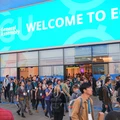
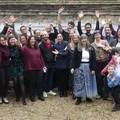
Thanks to the enthusiastic efforts of our members and volunteers, EGU26 was another record breaking year with an amazing 22,497 people participating in the General Assembly, both in Vienna and online!


On the ground or in the atmosphere? New satellite data can help characterize and pinpoint destructive events
  • Press release
  • 6 May 2026

Solar storms can quietly disrupt satellites, power grids, and communication systems across the globe. After a 2022 geomagnetic event knocked out dozens of Starlink satellites, the risks are no longer hypothetical. At EGU26, scientists unveil Swarm-AWARE, a new ESA project using satellite data and machine learning to distinguish space weather signals from natural hazards, paving the way for smarter forecasting and more resilient infrastructure.


Latest posts from EGU blogs

Mangroves at the edge: Coastal ecosystems in a year of climate extremes

This Sunday, July 26, marks the International Day for the Conservation of the Mangrove Ecosystem. We are currently experiecing critical crossroads globally, where groundbreaking data on global forest recovery collides with the immediate threats of an escalating climate crisis.El Niño is pushing Pacific sea surface temperatures toward levels that rank among the highest on record, and climate specialists expect damaging marine heat reaching almost half of the globe till the end of 2026. In the past, this kind of climatic …


GeoTalk: Meet Trevelayne Faller, Communications Officer for EU-funded raw materials research

Welcome to GeoTalk, Trevelayne! Could you introduce yourself to our readers? I hold a Bachelor’s degree in Psychology and a Master’s degree in Cognitive Neuroscience. Throughout my career, I’ve developed and implemented communication strategies that translate scientific knowledge into clear and engaging narratives. Currently, I’m the Project Communications Officer for the MOSMIN (Multiscale Observation Services for Mining-related Deposits) project. MOSMIN is an EU-funded research project coordinated by the Helmholtz-Zentrum Dresden-Rossendorf (HZDR). The project aims to develop innovative solutions to monitor …


What machine learning can and cannot tell us about floods

Floods are shaped by complex and nonlinear interactions between weather patterns, rainfall, soil properties, topography, land cover, and how wet a catchment already is. This complexity is one reason machine learning (ML) is increasingly used in hydrology. ML models can learn patterns from large and complex datasets with many variables. Early in my PhD, while exploring machine learning models for estimating flood magnitudes, I became interested in feature importance. I hoped it could help reveal which flood drivers mattered most. …